




































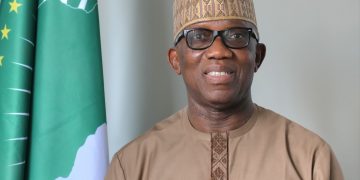





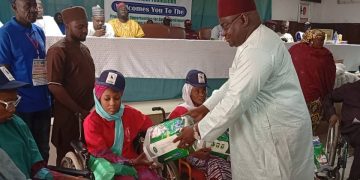

The Minister of State for Health and Social Welfare, Dr. Iziaq Adekunle Salako, has reiterated Nigeria’s dedication to achieving the global goal of ending AIDS by 2030.
Speaking at the commemoration of the 2024 World AIDS Day, with the theme “Take the Rights Path: Sustain the HIV Response and Stop HIV Among Children to End AIDS in Nigeria by 2030,” Dr. Salako called for sustained momentum in the fight against HIV/AIDS.
Dr. Salako expressed gratitude to key stakeholders, including donors, civil society, faith-based organizations, and traditional leaders, for their roles in advancing HIV response in the country.
He also hailed the National Agency for the Control of AIDS (NACA) for expanding access to testing, treatment, and prevention programmes while reducing stigma and discrimination.
Highlighting Nigeria’s progress, Dr. Salako noted the country’s HIV prevalence now stands at 1.4%, with about two million people living with HIV.
He told participants that HIV programmes have been integrated in the Sector-Wide Approach (SWAp) to align resources with national priorities, to ensure sustainability and accountability.
The Minister of State called for greater efforts from state governments, private sector players, and community leaders to prevent HIV transmission among children.
“Everyone’s voice matters, Together, we can build a healthier, more inclusive future for all and walk the path to ending AIDS in Nigeria by 2030 with determination, unity, and purpose.” he said.
In a remark, Director General of NACA, Dr. Temitope Ilori, emphasized the need for sustained efforts to eliminate HIV/AIDS, particularly among children.
Dr. Ilori pointed to milestones under the current administration, including the launch of the PMTCT and Pediatric Acceleration Committee, efforts to localize antiretroviral production, and enhanced data management systems.
“Scaling up prevention services nationwide, abolishing user fees for PMTCT services, and expanding health insurance schemes to include comprehensive HIV care are critical steps towards achieving equity in HIV prevention, treatment, and care,” Dr. Ilori stated.
She urged stakeholders to address stigma, funding gaps, and service delivery challenges while expanding health insurance coverage for comprehensive HIV care.
Also, United Nations Resident and Humanitarian Coordinator in Nigeria, Mr. Muhammed Fall, emphasized the need to prioritize human rights in HIV interventions.
He stressed the need to dismantle discriminatory policies that hinder access to healthcare for vulnerable populations, particularly women and children.
“We must ensure no child is born with HIV, no child dies from AIDS-related illnesses, and every child living with HIV has a healthy future,” he said.