





































…Says Proper Sanitation Aligns With Islamic Principles
The Abuja National Mosque has reiterated its support for the Clean Nigeria: Use the Toilet campaign, a national initiative aimed at eradicating open defecation in the country by 2030.
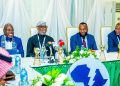
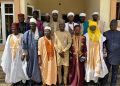
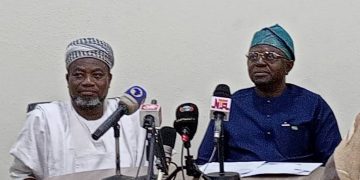
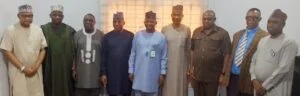
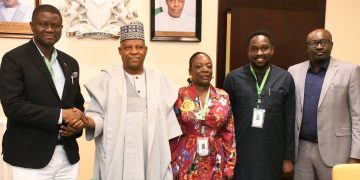
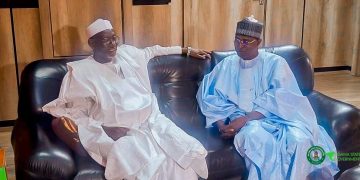
The Murshid of the Abuja National Mosque, Prof. Shehu Galadanchi, made this commitment while receiving a delegation from the Ministry of Water Resources and Sanitation, led by the Minister, Professor Joseph Utsev, in Abuja.
Represented by Prof. Kabir Adam, Prof. Galadanchi assured the government of the mosque’s full support in raising awareness about the importance of proper sanitation.
He emphasized that maintaining proper hygiene aligns with Islamic teachings, stating that every household is religiously obligated to have a toilet, while open defecation is strictly discouraged.
He stressed that the mosque’s has existing sanitation facilities, which cater to 5,000 to 6,000 worshippers daily noting that the mosque has toilets and ablution areas capable of serving 300 people simultaneously.
The Murshid of the Abuja National Mosque, emphasised that the mosque maintains designated spaces for funeral rites, ensuring the proper cleansing and preparation of the deceased before burial.
He attributed the persistence of open defecation to cultural practices rather than religious teachings.
“The National Mosque will continue to promote this message, not only within this mosque but across other mosques in Nigeria. We will encourage Imams nationwide to incorporate this campaign into their sermons and community engagements” he emphasized.
According to him, the visit is a sign of growing collaboration between religious institutions and government agencies acknowledging that, in the past, secularism had created a disconnect between places of worship and public health campaigns.
He noted that such divisions were no longer sustainable, as achieving national development goals required cooperation across all sectors of society.
He assured the Minister that the National Mosque and the wider Muslim community stood ready to support the initiative for the benefit of all Nigerians.
Earlier, the Minister of Water Resources and Sanitation, Professor Joseph Utsev, called for stronger collaboration between religious institutions and government agencies to promote the Clean Nigeria: Use the Toilet campaign.
Professor Utsev urged religious leaders to integrate sanitation messages into their teachings, ensuring that worshippers understand the significance of hygiene and the health risks associated with open defecation.
Highlighting the Tinubu administration’s commitment to public health and sanitation, the Minister emphasised that these efforts were integral to food security and economic growth.
Professor Utsev explained that the campaign, first launched in 2019, was re-inaugurated under Vice President Kashim Shettima, who now chairs its steering committee.
Utsev noted that 142 local government areas had already been declared open defecation-free, with Jigawa State being the only state to have fully met this goal.
The Minister who reaffirmed the government’s determination to extend this success nationwide highlighted the influence of Imams and religious leaders in shaping public behaviour by spreading awareness.
“Through sermons, public teachings, and community engagement, the mosque can serve as a powerful platform to promote hygiene and sanitation practices across the country,” he stated.
He also called for mosques to lead by example by providing adequate and accessible toilet facilities, setting a standard for cleanliness within religious institutions.
He expressed confidence that, with unity, commitment, and action, Nigeria could achieve its goal of becoming open defecation-free by 2030.
Professor Utsev thanked the Murshid, Imams, and staff of the National Mosque, as well as the media and other stakeholders, for their support in advancing the campaign.
The Clean Nigeria: Use the Toilet Campaign, aims to eliminate open defecation nationwide by mobilising communities, religious groups, and government agencies to promote proper sanitation and hygiene practices.