

































By Admin
The Economic Community of West African States, ECOWAS, says the region achieved strong economic recovery in 2025, with growth hitting 4.6 per cent and projected to reach five per cent in 2026, despite global economic slowdowns and geopolitical uncertainties.
Presenting the Community’s annual report, ECOWAS Commission President, Dr. Omar Touray, attributed the growth to structural reforms, increased investment in mining and energy, improved trade facilitation, and a rebound in services, transport, and tourism.
Inflation and fiscal deficits also improved across the sub-region, reflecting stronger macroeconomic management.
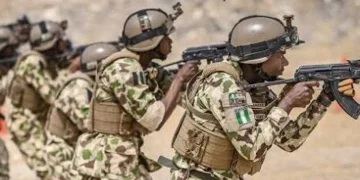
On security, ECOWAS intensified preventive diplomacy and counter-terrorism efforts, including the rotation of the ECOWAS Standby Force and the operationalisation of the 1,650-strong ECOWAS Counter-Terrorism Brigade.
The bloc also took over the West Africa Police Information System from Interpol to enhance organised crime control.
In regional integration, progress was recorded in free movement, trade facilitation, and digital transformation.
Seven member states, including Nigeria, are implementing the ECOWAS National Biometric Identity Card, while cross-border initiatives support border communities, particularly women.
The Commission highlighted social and infrastructure investments, including support for women-led SMEs, cross-border traders, renewable energy, regional road studies, and digital connectivity expansion.
Humanitarian and disaster risk reduction efforts reached vulnerable groups across the region.
ECOWAS reaffirmed its zero-tolerance stance on unconstitutional changes of government, condemning the attempted coup in Benin, and welcomed Guinea back as a full member after successful elections and the lifting of sanctions.
The report underscores ECOWAS’ commitment to a peaceful, prosperous, and fully integrated West Africa through sound economic policies, strengthened security architecture, and regional cooperation.