









































By Peter Adelowo
The Director of Tourism in the Federal Capital Territory Administration, Ann Nenadi Dogo, has stressed the need for stronger policy-driven investment in local tourism assets to unlock greater socio-economic value for the nation.
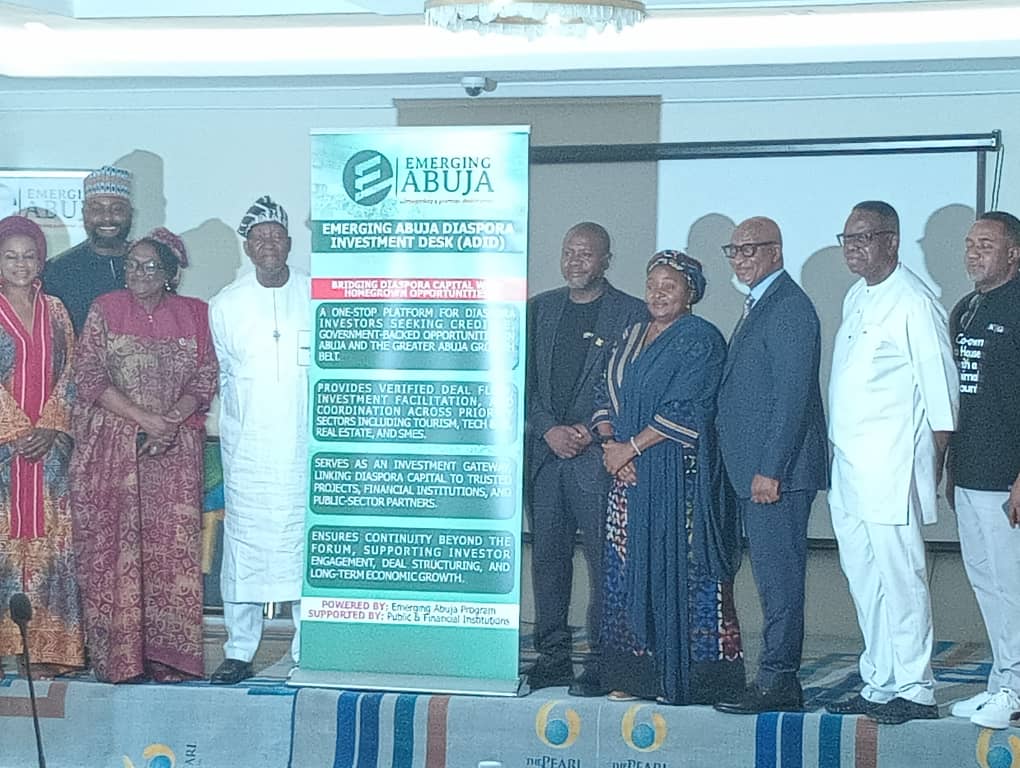
Speaking at the Emerging Abuja Investment Forum, themed “Bridging Worlds – Turning Diaspora Wealth into Home-Grown Opportunities,” Dogo said the FCT holds vast untapped tourism potential, describing its cultural sites, waterfalls, islands, and traditional heritage as “policy-ready low-hanging fruits” capable of boosting jobs, enterprise development, and revenue generation.
She explained that targeted policies to encourage early-stage investment, improve infrastructure around tourist sites, and promote private-sector participation would significantly enhance returns for investors and communities.
Dogo shared insights from a recent cultural naming ceremony organised for foreign guests, saying it attracted global attention and demonstrated the commercial value of indigenous experiences when backed by supportive institutional frameworks.
She also pointed to Nigeria’s rich culinary heritage, including local snacks such as kuli kuli, as viable areas for policy-guided product branding and export.
According to her, prioritising tourism within national and sub-national planning would further strengthen diaspora confidence, attract capital inflow, and stimulate innovation across the value chain.
Dogo who described tourism as “a living sector,” urging Nigerians at home and abroad to align with ongoing efforts to expand the industry maintained that sustained policy engagement will make the FCT a tourism hub and position Nigeria more competitively on the global stage.
Earlier, the National Coordinator of the Emerging Abuja Projects and organiser of “Groovy December,” Dr. Kenneth Ibe-Kalu, stressed the need for a people-driven approach to nation building, with emphasis on repositioning Abuja as a major hub for tourism, culture, and investment.
Dr. Ibe-Kalu said the Imagine Abuja initiative is anchored on the principle that national development goes beyond physical infrastructure and must prioritise the mobilisation of people as agents of change.
He explained that the vision was conceived several years ago after concerns that Abuja was gradually becoming a closed city in need of social and economic rebranding.
According to him, inspiration was drawn from global cities and economic models—particularly countries such as Saudi Arabia—where tourism and entertainment have become strong drivers of national revenue and private-sector growth.
Dr. Ibe-Kalu disclosed that the policy proposal for rebranding Abuja received approval from the Federal Capital Territory Administration on November 25 last year, with full implementation commencing in May this year.
“Under the initiative, three strategic pillars are being pursued: social rebranding, which introduces residents as Abujans; Groovy December, designed to boost tourism and reverse the annual festive-season exodus; and destination development, including ongoing work at the Karshi Waterfalls,” Dr. Ibe-Kalu stated.
He added that the Diaspora Investment Forum was created in response to Nigerians abroad who have expressed readiness to invest back home, noting that economic growth is directly linked to the movement and participation of people.
On his part, the Chairman of Abuja “Groovy December,” Mr. Imoh Ebong, said the Emerging Abuja programme outlines a series of activities aimed at repositioning the capital city through entertainment, tourism, and investment promotion.
He described entertainment infrastructure as a critical driver of tourism and called for stronger private-sector participation, stressing that globally, sustainable economies are built through private investment and partnership, not government funding alone.
Mr. Ebong explained that the launch of the Emerging Abuja Investment Forum and the Diaspora Investment Desk, will provide credible investment information and direct links to opportunities, with the aim of reducing fraud, strengthening investor confidence, and expanding Abuja’s economic base.
On her part, the Chief Executive Officer of Caskada Integrated Limited and tourism consultant, Mrs. Nanna Dashe Yakubu, said the tourism sector offers strong potential for job creation, peace building, and economic expansion.
She noted that tourism is one of the fastest-growing industries globally and encouraged more investments—particularly in small businesses across the value chain such as restaurants, festivals, hiking services, and the creative industry.
According to her, tourism supports cultural preservation, strengthens communities, and generates high economic returns, especially for young people.
Mrs. Yakubu urged government to provide basic infrastructure and a more enabling environment to attract private-sector participation, stressing that public-private collaboration remains central to reducing unemployment and boosting Nigeria’s long-term economic outlook.