


































By Peter Adelowo
The Chairman of the Independent National Electoral Commission, INEC, Professor Mahmood Yakubu, has called for the creation of an electoral offenses tribunal that has specific jurisdiction for the prosecution of electoral offenders for the speedy dispensation of electoral cases in Nigeria.
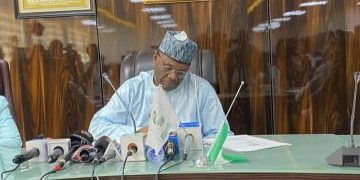
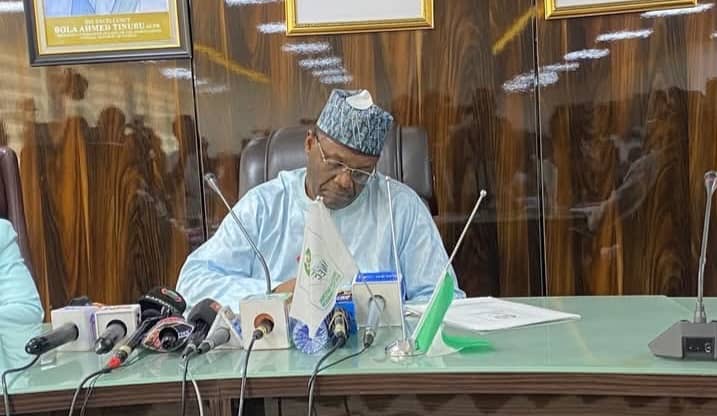
The Chairman made the call during the Commission’s first quarterly consultative meeting with media executives and INEC Press Corps at the Commission’s headquarters in Abuja the nation’s capital.
Yakubu lamented that it took nearly six years for the Commission to achieve a successful prosecution of offenders at the trial court.
He said that through INEC’s collaboration with the Nigerian Bar Association (NBA), cases involving 774 alleged offenders from the 2023 general election are being prosecuted
He appealed for the continuous support of the Media, especially in critical areas of reform of which one is the prosecution of electoral offenders.
He said that the judicial and legislative action in the last few days underscored INEC’s effort to deal with offenses involving officials of the commission, and the challenges in dealing with electoral offences.
“No priority attention is given to such cases as the courts deal with a variety of other issues. Consequently, electoral offenses are carried over from one general election to another which may sometimes affect the diligent prosecution of the cases.
“It is therefore imperative to renew our call for the creation of the electoral offenses tribunal that has a specific jurisdiction and limited time frame for the speedy dispensation of cases.
“However, it also highlights the challenges we face in dealing with electoral offenses. The recent successful prosecution of a returning officer in Akwa Ibom State Niger Delta region is a case in point.
The commission has been diligently pursuing the case which arose from the 2019 general election.
“Successful prosecutions have been recorded in Kebbi and Kogi states while our collaboration with the Economic and Financial Crimes Commission (EFCC), on vote buying has yielded similar results in Lagos, Kwara and Gombe states.
“Yet, many cases are still pending. A major obstacle to the speedy dispensation of justice in this regard is that electoral offenses are not time-bound as is the case with post-election offenses through the tribunals.
“Furthermore, they are solely prosecuted by the magistrate and state high courts in the jurisdiction where the alleged offenses are committed” he said.