















































The Niger Basin Authority (NBA) and Lake Chad Basin Commission (LCBC) have called for stronger regional cooperation and strategic investments to address shared water, climate, security and livelihood challenges across the Niger and Lake Chad basins.
The call was made at a three-day regional conference on hydrodiplomacy, gender and strategic investments for peace, stability and shared prosperity in transboundary basins, held in Abuja.
Executive Secretary of the NBA, Mr Kocou Houanye, said the conference provided a platform for member states, development partners and other stakeholders to strengthen dialogue, prevent conflicts over natural resources and promote sustainable development.
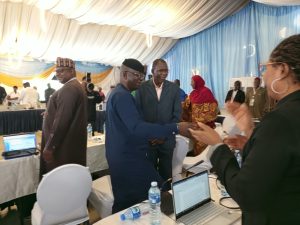
Houanye said the two basins face interconnected ecological, socio-economic and security challenges, with millions of people depending heavily on natural resources for their livelihoods, making stronger cooperation and investment essential to building resilience.
He called for accelerated investment in strategic infrastructure, agriculture and other development areas, saying such investments could contribute to peace, stability and shared prosperity across the basins.
The NBA Executive Secretary said the conference would be followed by a meeting of the NBA Regional Steering Committee, where participants would review programme performance, work plans, budgets and activities of dam agencies operating within the Niger Basin.
He said implementation of the Programme for Integrated Development and Adaptation to Climate Change in the Niger Basin, PIDACC, had improved, with physical implementation rising from 37 to 48.3 per cent, while financial implementation increased from 17 to 57 per cent and commitments from 49 to 92 per cent.
Houanye said Nigeria’s support had contributed to the progress recorded in PIDACC implementation, adding that discussions were underway with development partners on preparing a new phase with wider participation by NBA member states.
The representative of German Cooperation, Mrs Hanna Albrecht, said climate change, pressure on natural resources, insecurity and threats to livelihoods required coordinated responses across national borders, stressing that technical knowledge, institutional dialogue and community participation must work together.
She said water cooperation could become a driver of peace and sustainable economic opportunities, particularly for women and young people, while expressing support for the proposed Abuja Declaration as a framework for concrete follow-up actions.
Executive Secretary of the LCBC, Ambassador Ibrahim Babani, said the commission was strengthening tools to help member states assess water demand, map crop water requirements, identify water deficits and surpluses, and improve groundwater management.
Babani said women and young people must be fully involved in water diplomacy as decision-makers, peace mediators, innovators and development partners, adding that the LCBC would advance the conference outcomes ahead of the 2026 UN Water Conference.
Representing Nigeria’s National Focal Structure, Mrs Angela Keyede, said the conference offered an opportunity to strengthen regional cooperation on water management, climate resilience, peace and security, while ensuring that gender considerations were integrated into transboundary water governance and investment planning.
She said the NBA and LCBC were also reviewing gender policy and strategic frameworks to promote greater inclusion of women and vulnerable groups in water governance and development programmes.
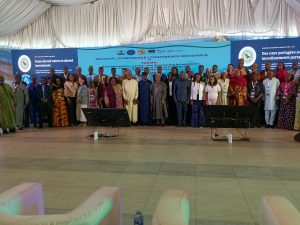
Minister of Water Resources and Sanitation, Prof. Joseph Utsev, said Nigeria remained committed to strengthening cooperation with the NBA, LCBC, ECOWAS, development partners, financial institutions, civil society and communities to promote sustainable water resources management, climate resilience and regional development.
Utsev urged participants to translate the conference discussions into concrete actions, partnerships and investments in water supply, sanitation, ecosystem restoration, climate adaptation and critical infrastructure, stressing that sustained regional cooperation was essential to achieving peace, resilience and shared prosperity across the Niger and Lake Chad basins.