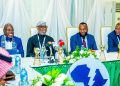






































Nigeria and eight other member states of the Niger Basin have pledged stronger cooperation to revive groundwater sources and strengthen food security in the face of climate change.
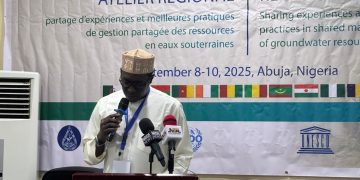
The commitment was renewed at the opening of a regional workshop on Integrated Management of Groundwater Resources (IWRM) in Abuja.
In his welcome address, the Director General of the Nigeria Hydrological Services Agency, NiHSA, Umar Mohammed, said Nigeria remains committed to integrated water resources management and regional solidarity.
He explained that the Sokoto Rima Basin has been severely affected by river course changes linked to climate shifts, pushing groundwater levels from 3–4 meters to as deep as 28 meters.
“Farmers abandoned their sites because the cost of accessing water became unbearable. With the Sahara and Sahel Observatory, OSS, we launched a recharge project, and we are now recording promising results” Mohammed emphasized.
“Even after the rainy season, we expect significant improvement in groundwater levels,” he said.
According to him, NiHSA is also piloting a water transfer initiative with the Niger State Government to move water from flood-prone zones to water-stressed communities.
In her presentation, the Water Engineer of the Sahara and Sahel Observatory, OSS, Soumaya Mouhli, highlighted the progress made in studying the ITTAS aquifer, a vast underground system covering two million square kilometers and sustaining over 30 million people.
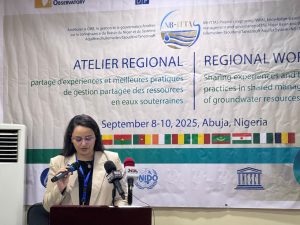
“When the project began in 2019, data was scarce. Now we know the vulnerable zones, sources of pollution, and possible solutions to improve water access in line with the Sustainable Development Goals,” she said.
On his part, the member of Nigeria’s Inter-Ministerial Committee on the Niger Basin and the lullemeden-Taoudeni/Tanezrouft Aquifer System NB-ITTAS, Prof. Murtala Abubakar Gada, stressed that ensuring a steady flow in the Sokoto River is vital to guaranteeing year-round groundwater recharge.
“Our rivers are seasonal, but continuous recharge will secure water supplies for local communities and support farming activities,” he noted.
The workshop aims to review pilot site results, update intervention strategies, and map out next steps for sustainable water governance across the basin.
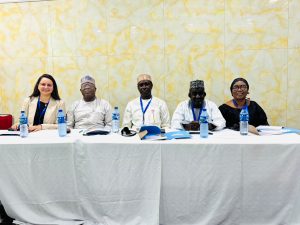
The meeting, hosted by Nigeria in partnership with the Sahara and Sahel Observatory (OSS), forms part of the ongoing Improving Integrated Water Resources Management, IWRM, Knowledge-Based Management and Governance of the Niger Basin and the Iullemeden-Taoudeni/Tanezrouft Aquifer System (NB-ITTAS) project.
The member states of the NB-ITTAS are Benin, Burkina Faso, Cameroon, Chad, Côte d’Ivoire, Guinea, Mali, Niger, and Nigeria.