











































By Peter Adelowo
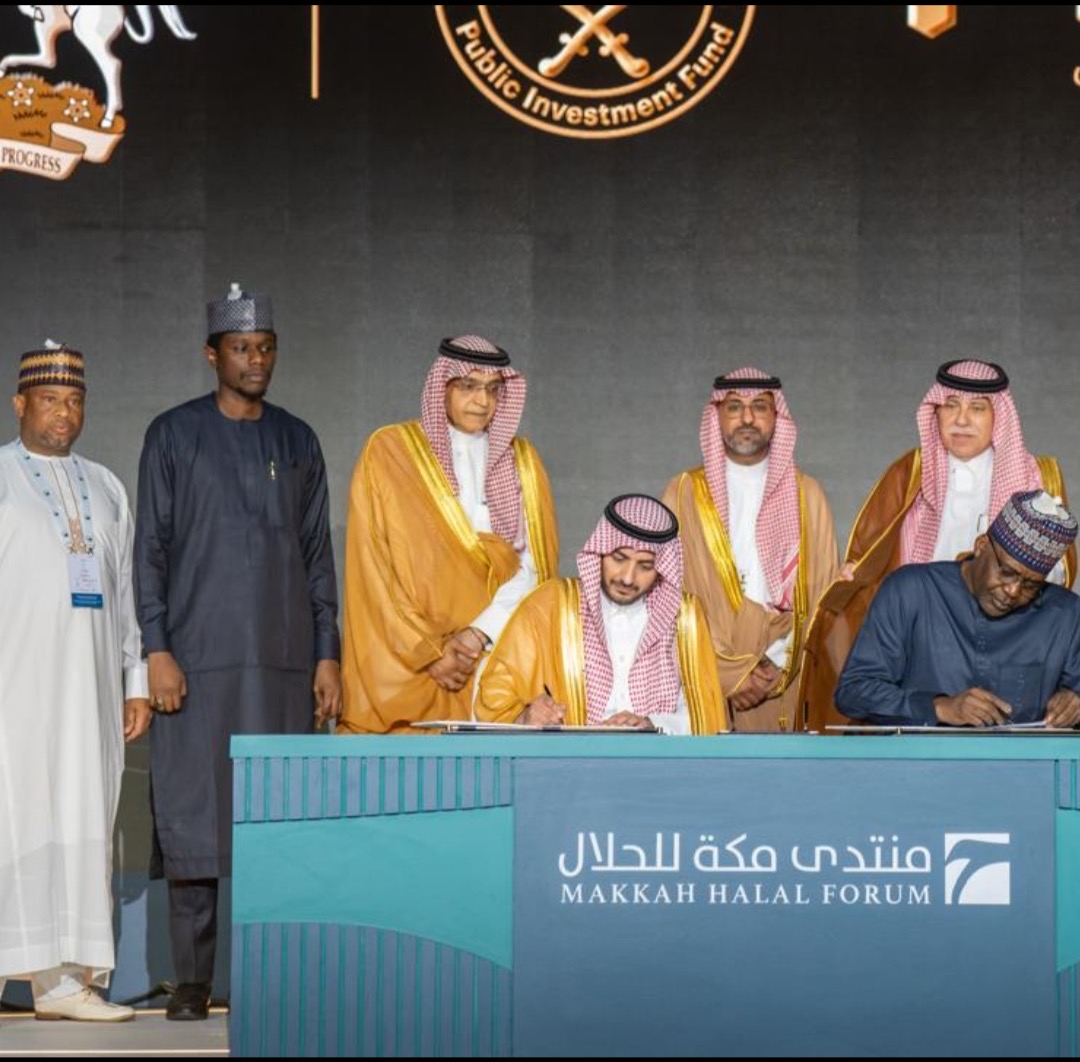
The Nigerian Government has signed a cooperation agreement with Saudi Arabia’s Halal Products Development Company (HPDC) to establish Nigeria as a leading player in the global halal market valued at $7.7 trillion.
This is contained in a statement signed by the Senior Special Assistant to the President on Media & Communications, Office of the Vice President, Stanley Nkwocha, in Abuja.
The statement says the agreement will facilitate investment, technical cooperation, and market access across key sectors, including food production, pharmaceuticals, finance, and livestock for both countries.
It points out that the partnership represents a game-changing opportunity to transform Nigeria into a global halal economy powerhouse.
According to the statement, the Vice President who was represented by Deputy Chief of Staff to the President, Office of the Vice President, Senator Ibrahim Hassan Hadejia, stresses that the collaboration is an important step to not only tap into the lucrative halal market but to establish Nigeria as a leading global player.
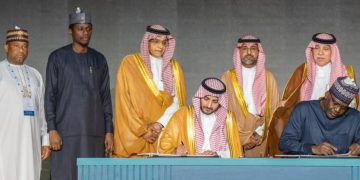
The statement says the agreement was executed with HPDC, a subsidiary of the Saudi Public Investment Fund, represented by its Chief Executive Officer, Fahad Alnuhait, in the presence of Saudi Arabia’s Minister of Commerce, Dr. Majid bin Abdullah Al-Qasabi; Chairman of the Makkah Halal Forum’s Organizing Committee, His Excellency Mr. Fawaz bin Talal Al-Harbi, and Chairman of Makkah Chamber of Commerce and Industry, His Excellency Mr. Abdullah bin Saleh Kamel.
According to the statement, the Special Assistant to the President on Export Promotion, Aliyu Bunu Sheriff, explains that the partnership builds on Nigeria’s growing Islamic finance sector, which has seen success through Sukuk bonds for infrastructure financing and the establishment of Islamic banks.
It adds that VP Shettima had during the Halal Economy Stakeholders Engagement Programme held at the Banquet Hall of the Presidential Villa, Abuja, in September last year emphasized the economic potential of the sector, noting that “increasing Nigeria’s halal exports to OIC markets from 2% to 6% could boost the country’s GDP by $540 million, while strategic import substitution could add nearly $1 billion by 2027.