













































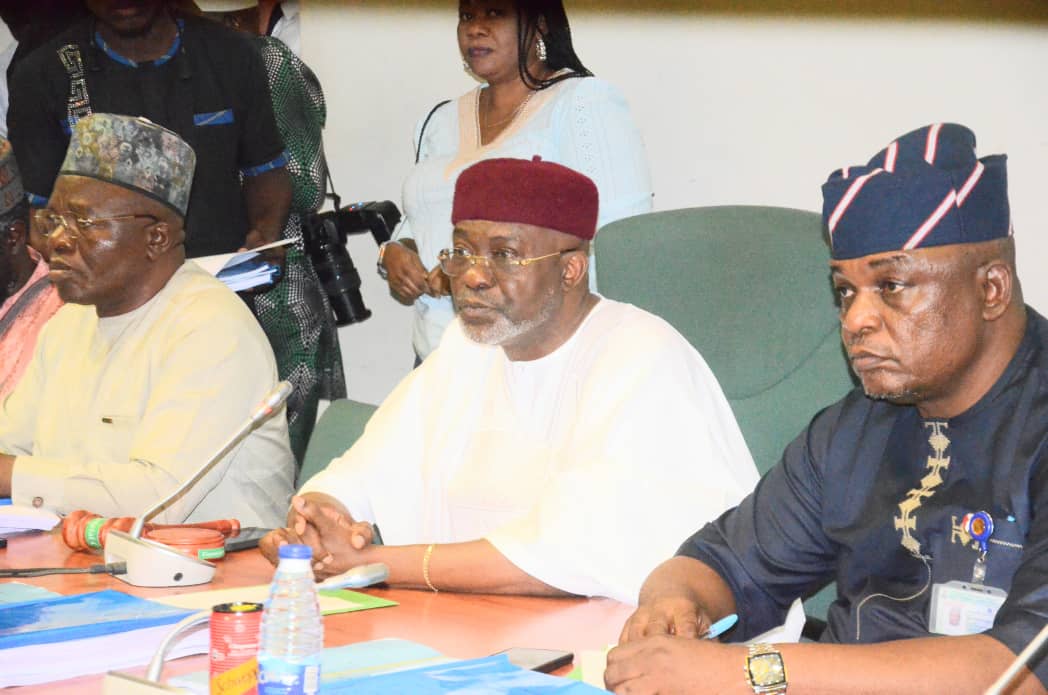
By Joel Akubo
The House of Representatives has reaffirmed its commitment to strengthening institutions responsible for combating financial crimes to ensure more effective service delivery and improved global standing for Nigeria.
Chairman of the House Committee on Financial Crimes, Mr. Ginger Onwusibe, made the pledge during the 2026 budget defence session with the Economic and Financial Crimes Commission, EFCC, and the Nigeria Financial Intelligence Unit, NFIU.
Mr. Onwusibe explained that the 2026 budget prioritises infrastructure development and food security, with broader goals of achieving macroeconomic stability, improving the business environment, creating jobs, and enhancing human capital development.
He stressed that effective budget implementation would depend on timely execution, increased oil production, and sustained growth in non-oil revenues, noting that Nigeria’s economy is showing signs of cautious recovery. He cited an IMF projection of 4.4 per cent economic growth in 2026.
The Committee Chairman reiterated the House’s resolve to enact robust and responsive laws to tackle evolving criminal tactics, including cybercrime and virtual asset-related offences.
He said the budget review would focus on strengthening investigative and prosecutorial capacity, enhancing international cooperation and information sharing, improving asset recovery and management, and building institutional expertise.
Mr. Onwusibe commended the EFCC and NFIU for their efforts, particularly Nigeria’s recent removal from the Financial Action Task Force grey list, describing it as a major milestone.
He noted that the development is expected to boost Nigeria’s international credibility, attract foreign investment, improve access to global financing, and strengthen the country’s financial stability.