










































By Franca Anthony
Vice President Kashim Shettima has urged increased investments in climate-smart agriculture, regenerative farming practices and digital solutions to enhance food security and resilience in Nigeria.
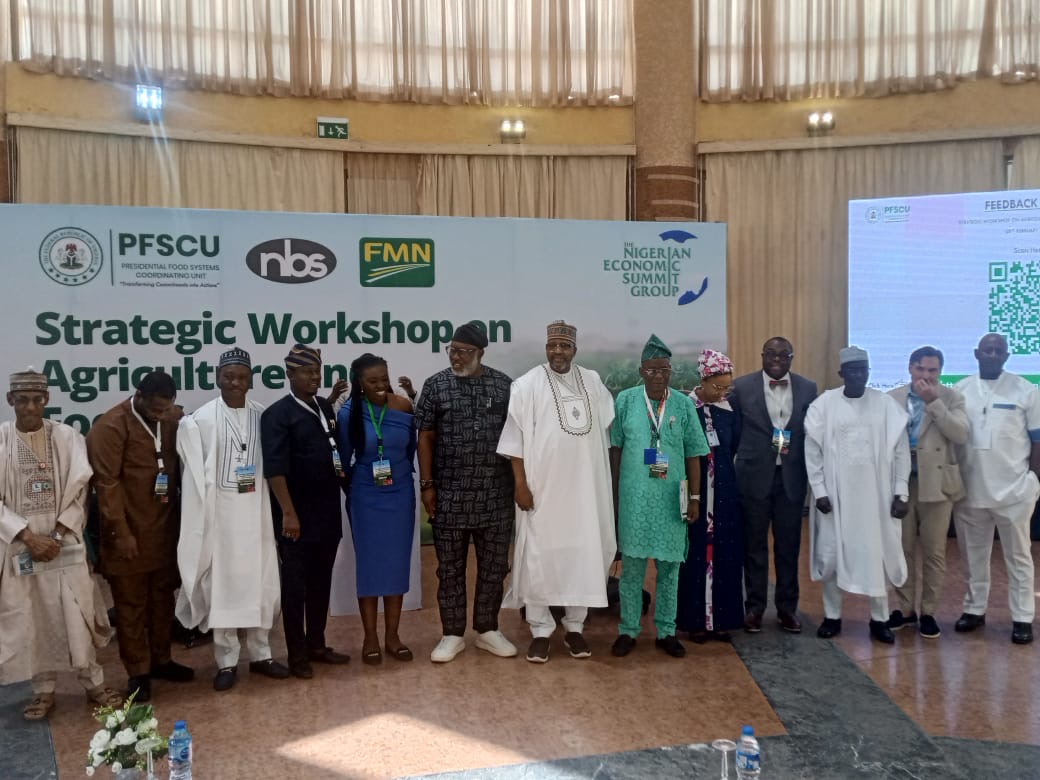
Speaking at a one-day strategic workshop on agriculture and food security in Abuja, Shettima emphasized the critical role of the private sector in transforming Nigeria’s agricultural landscape.
Shettima, represented by his Special Adviser on Special Duties, Dr. Aliyu Modibo, highlighted the need for a market-driven approach as the only sustainable pathway to achieving food security.
The Vice President reiterated the government’s commitment to deploying modern technology to optimize agricultural yields and reduce food waste, urging investment in digital solutions and regenerative agricultural practices to enhance resilience against climate change.
On her part, the Executive Secretary of the PFSCU, Ms. Marion Moon, emphasized the importance of unlocking irrigation infrastructure to enable year-round farming and reducing reliance on seasonal rainfall.
She also stressed the need to enhance the availability of high-quality genetic inputs for crops, livestock, and fish to improve productivity and resilience.
Statistician General of the NBS, Prince Adeyemi Adeniran, represented by a Director, Ayodele Babalola, reaffirmed the NBS’s commitment to providing quality, reliable data to guide policymaking for economic prosperity.
Vice Chairman of the NESG, Mr. Bayo Olusanya, represented by Uche Ogbonna, called for urgent action to fix Nigeria’s food systems, warning against the cost of inaction.
The workshop was organized by the Nigerian Economic Summit Group (NESG), the National Bureau of Statistics (NBS), and the Presidential Food System Coordinating Unit, PFSCU, and it aimed to validate findings from the Agriculture and Food Security Survey, an initiative led by the NBS to generate data-driven insights for policy and program development.