







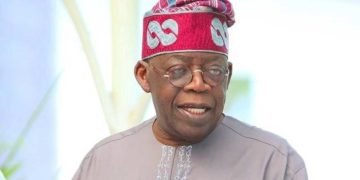






















In a bold move to recalibrate Nigeria’s economic foundations, President Bola Ahmed Tinubu has unveiled a ₦1 trillion investment in the solid minerals sector — the most ambitious government-led mining initiative in the nation’s history.
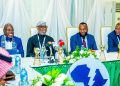
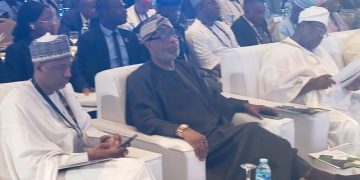
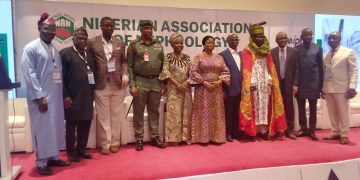
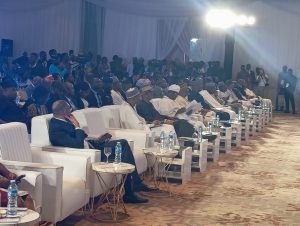
President Tinubu stated this during the 10th edition of Nigeria Mining Week 2025 in Abuja,
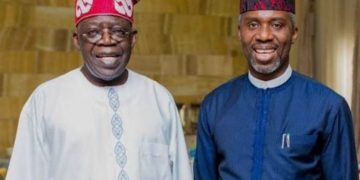
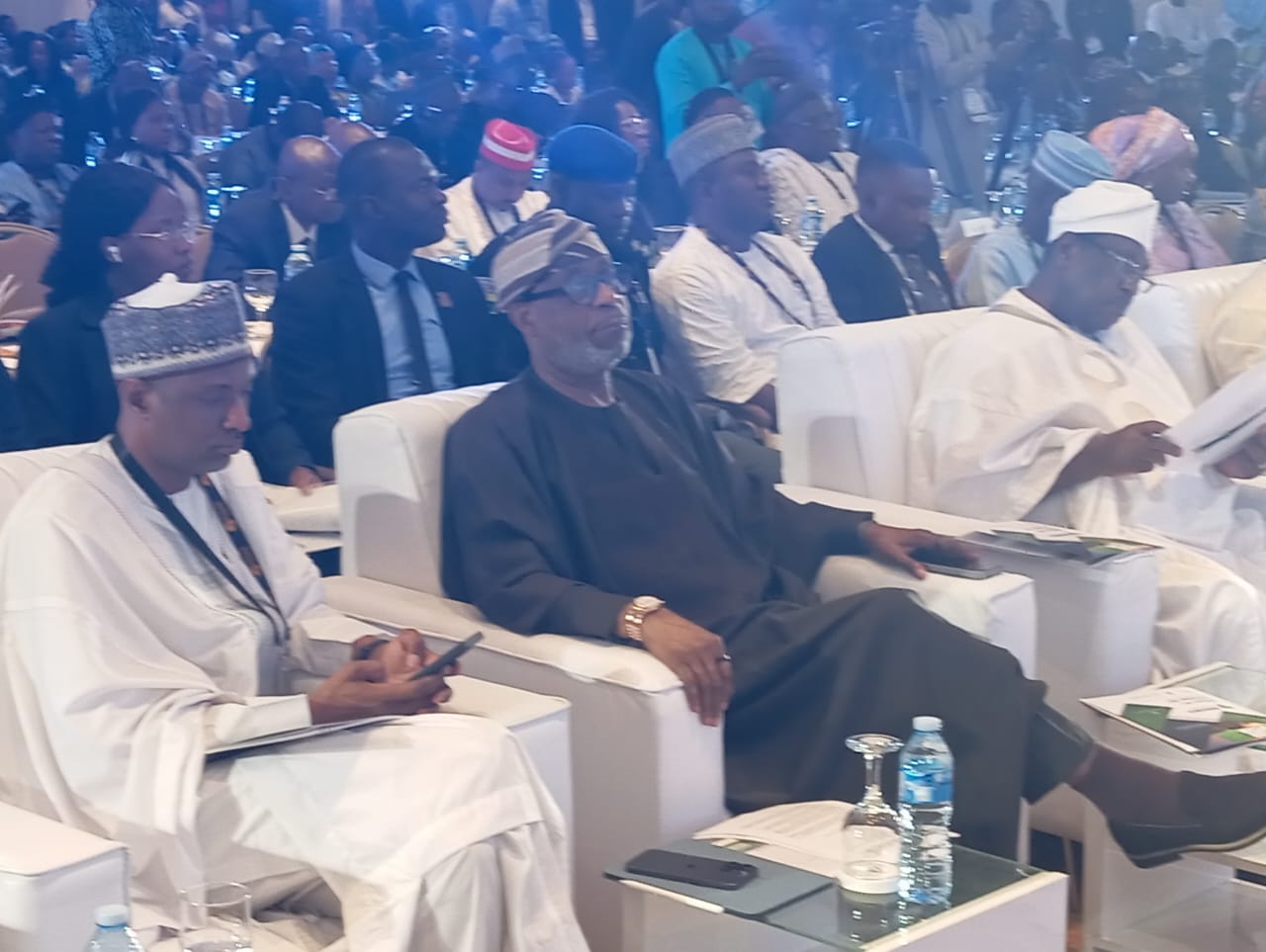
The President, represented by the Secretary to the Government of the Federation (SGF), Senator George Akume, described the mining sector as a “new frontier of national prosperity.”
He noted that the ₦1 trillion commitment forms part of a broader ₦4.5 trillion expansion in the 2025 federal budget.
According to him, the funds are earmarked for intensive geo-scientific exploration, nationwide geological surveys, and critical infrastructure upgrades aimed at unlocking Nigeria’s vast but underutilised mineral resources.
“This is not just an investment in mining,” President Tinubu declared.
“It is an investment in the future of our economy — in jobs, industries, and innovation. We are laying the foundation for a post-oil Nigeria that is self-reliant, resilient, and globally competitive.”
Highlighting rapid progress in the sector, Tinubu revealed that revenue rose from ₦6 billion in 2023 to over ₦38 billion in 2024 — a sixfold increase.
He attributed this to ongoing reforms, tighter regulatory oversight, and the creation of the Nigeria Solid Minerals Company, a special-purpose vehicle established to attract private capital and accelerate local mineral processing.
The President also called on African nations to retain more value from their natural resources by developing local industrial ecosystems. “Africa must move from being a raw material exporter to a value-adding powerhouse,” he said. “Nigeria is ready to lead that charge — from minerals to miracles.”
He pledged strict enforcement of environmental standards, reiterating his administration’s commitment to the principles of the Nigeria Extractive Industries Transparency Initiative (NEITI). “The era of environmental abuse and unsafe mining practices is over,” he stated.
Calling for unity among all stakeholders — including federal and state governments, investors, and host communities — Tinubu envisioned a future where mining rivals oil in GDP contribution. “Nigeria must become a continental model for sustainable, inclusive development,” he concluded.
In his goodwill message, Chairman of the Senate Committee on Solid Minerals, Senator Sampson Ekong, assured the Ministry of continued legislative support to drive favourable policies and reforms. He stressed the importance of collaboration and urged stakeholders to avoid conflicts that could undermine sectoral progress.
Minister of Solid Minerals Development, Dr. Dele Alake, described solid minerals as Nigeria’s next major job-creating sector. He emphasised that bold leadership — not a lack of planning — has often hindered development.
“What we lack is not policy, but courageous minds like President Tinubu’s to implement them,” he said.
Dr. Alake added that the Ministry, under his watch, has recorded phenomenal revenue growth and is regarded as one of the most transparent in the country. “Business is no longer as usual. Our reforms have grown sector revenue by 4.6 percent, and policy implementation must now be taken seriously if we want real growth,” he asserted.
He also called for a behavioural shift among Nigerians, urging citizens to protect and value national resources. “Local value chains must be developed, and natural assets treated as national treasures,” he said.
Dr. Alake pledged that the Ministry would continue pushing forward until the solid minerals sector becomes the “economic pilot” of the nation.
Also speaking, Minister of Steel Development, Prince Shuaibu Abubakar Audu, highlighted the steel sector as a key driver of industrial growth. He said its revival is central to achieving the President’s broader vision for economic diversification.
President of the Miners Association of Nigeria, Mr. Dele Ayanleke, in his remarks, praised the evolution of the Nigeria Mining Week into a platform that has shaped policy, connected stakeholders, and driven responsible development of minerals such as gold, lithium, barite, and bitumen.
“As we look to the future, the challenges we face — from illegal mining to infrastructure gaps — must become stepping stones for progress,” Ayanleke said.
He called on government to ensure inclusivity in reform, urged investors to seize emerging opportunities, and encouraged stakeholders to uphold transparency, innovation, and sustainability.
“Together, we can transform mining into a cornerstone of Nigeria’s One Trillion Dollar Economy by 2030,” he added.
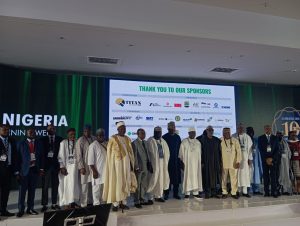
In his welcome address, Permanent Secretary of the Ministry of Solid Minerals Development, Faruk Yabo, reaffirmed the Ministry’s commitment to building a transparent, technology-driven, and investor-friendly mining sector aligned with global best practices.