








































By Admin
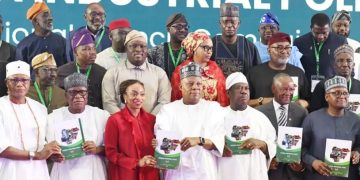
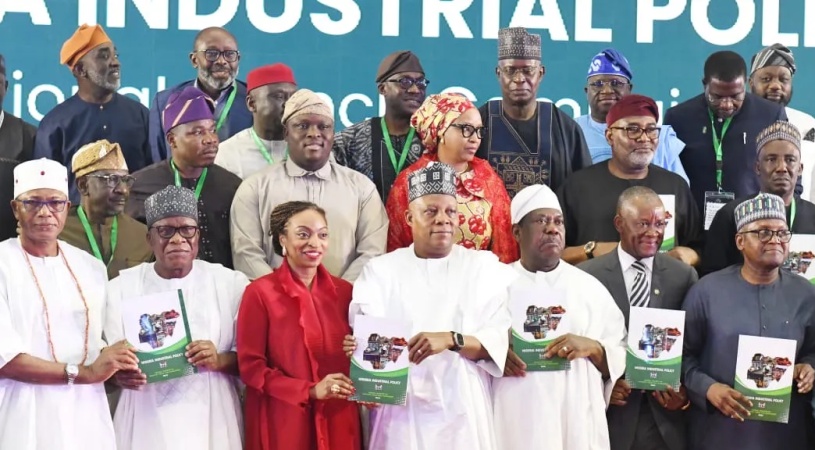
President Bola Tinubu has unveiled Nigeria’s Industrial Policy 2025, describing it as a roadmap to strengthen the country’s industrial base, boost production, create jobs, and enhance competitiveness.
The launch took place at the Bola Ahmed Tinubu International Conference Centre, in Abuja, with Vice-President Kashim Shettima representing him.
The policy seeks to address challenges such as fragmented value chains, high production costs, infrastructure gaps, and weak coordination between government and industry.
Tinubu emphasized that industrialization requires actionable steps across energy, trade, infrastructure, finance, skills, and innovation, with strong public-private partnerships.
He stressed that success would be measured by operational factories, job creation, increased exports, and value retention in the economy, rather than the number of policy documents produced.
The policy prioritizes strategic sector development, integration of micro, small, and medium enterprises, and advancement along the value chain from raw materials to finished goods.
The president commended Sen. John Enoh and technical teams for their role in shaping the policy and called for timely execution across relevant Ministries, Departments, and Agencies (MDAs).
Industrialist Aliko Dangote praised the policy as progressive, noting Nigeria’s strong private sector and expressing confidence that reforms, including exchange rate stability, will attract further investment.
He urged the protection of indigenous industries to ensure sustainable growth.
The Industrial Policy 2025 is positioned as a central component of Nigeria’s economic strategy, aligning infrastructure, skills development, technology, and innovation to drive industrial growth and inclusive prosperity.
SIDEBAR