


























A bold vision to reposition women at the heart of Africa’s mineral economy is gaining momentum as Women in Mining Africa (WiM Africa) unveiled a transformative five-year strategy aimed at mainstreaming women across the continent’s mining value chain.
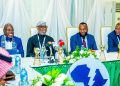
At a high-level virtual event of African First Ladies, policymakers, and stakeholders, the First Lady of the Islamic Republic of Mauritania, Dr. Mariene Mint Dah called for urgent action on women’s inclusion in Africa’s mining sector.
Dr. Mariene Mint Dah who described empowering women not as a choice, but as a developmental necessity said it’s time to recognize the leadership roles women already hold in Africa’s mining sector.
Dah who led the formal validation of the Women in Mining Africa Action Plan for 2025 to 2030 described the moment as historic, noting that to empower women is not to grant them a place, but to recognize the place they already hold.
She noted that in Mauritania, women currently occupy 30 percent of government ministerial positions a clear sign of political will while highlighting that several national reforms, including laws securing women’s seats in parliament and increased investment in technical training for careers in mining, geology, and energy.
She warned that as Africa faces rising global competition and growing demand for equitable growth, women’s participation is no longer optional, but it is essential.
“The Action Plan, now officially adopted, outlines three strategic focus areas: building coalitions, advocating for women and host communities, and economic empowerment. These goals will be achieved through a Seven-Point Program, which includes women-led mining zones, legal and policy support, leadership development, and digital advocacy. ”
At the heart of the plan is a $150 million financing framework backed by development institutions, private investors, and corporate sponsors, with strict monitoring to ensure accountability.
In her presentation, the Executive Director and Coordinator of Women in Mining, WiM, Africa, Dr. Comfort Asokoro-Ogaji emphasized the urgency of shifting the gender dynamics in Africa’s resource-rich mining sector.
“Africa holds nearly a third of the world’s mineral wealth, yet women — often the backbone of their communities — remain largely excluded from decision-making and economic benefits. This agenda is about rewriting that story,” she said.
According to her, the newly launched Action Plan, built on a robust seven-point agenda, seeks to establish women-led value chains, create women-only mining zones and cooperatives, and provide support in areas such as Environmental, Social and Governance (ESG), climate resilience, and policy advocacy.
Earlier, the President of the Africa Business Council, AFBC, Dr. Amany Asfour called for a continental shift in how African minerals, especially gemstones, are transformed and marketed to unlock greater economic value.
“Africa must stop exporting raw resources only to import them back as expensive products. Women have a crucial role to play in reversing this trend through value addition and entrepreneurship,” Dr. Asfour stated.
On her part, the Head of Afreximbank’s MANSA Digital Initiative, Maureen Nneka Mba, who applauded WiM Africa’s strategic push, emphasized the need for financial inclusion and access to markets for women in mining.
Also, speakers agreed that beyond gender equality, empowering women in mining is a smart economic strategy—one that could unlock innovation, ensure more equitable resource governance, and drive sustainable development across the continent.
High points on the agenda were legal support for women miners and a drive to promote equitable participation in the lucrative mineral processing and value addition sectors.
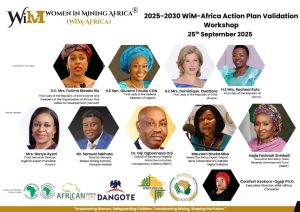
The event brought together a coalition of leaders and stakeholders championing gender equity and economic growth in the mining sector.
By Georgina Humphrey