








































The Permanent Secretary of the Ministry of Solid Minerals Development, Dr. Mary Ogbe, has reaffirmed Nigeria’s commitment to building a resilient and inclusive mining sector that fuels economic growth, uplifts communities, and aligns with global best practices.
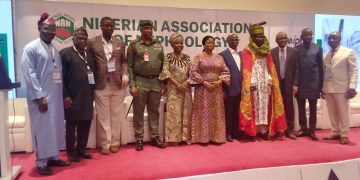
Dr. Ogbe who stated this while speaking at the 2024 Nigerian Mining Week in Abuja, highlighted the transformative journey the sector is undergoing through strategic policies and regulatory frameworks under the Minister, Dr. Dele Alake.
Speaking on the theme, “Overview of the Nigerian Mining Sector: Legal and Regulatory Frameworks for Nurturing Local Content in Mineral Exploration and Mining,” Dr. Ogbe emphasized government’s unwavering commitment to turning Nigeria’s mineral wealth into a cornerstone for economic diversification and sustainable development.
“We are not merely refining an industry; we are building a resilient and inclusive mining powerhouse that taps into the vast potential of our land and its people,” Dr. Ogbe stated. “Our approach is dynamic and uncompromising, laying the groundwork for a sector that not only competes globally but uplifts communities and drives Nigeria’s sustainable future forward.” she added.
Dr. Ogbe revealed that the government’s transformation blueprint, the 7-Point Agenda, targets critical areas such as data gathering, mine surveillance, community engagement, environmental sustainability, and enforcement mechanisms.
According to her, central to this agenda is value addition, with a policy mandating mining lease applicants to submit a value addition plan before approval.
“This approach underscores the shift from exporting raw minerals to processing them locally, thereby maximizing economic benefits, creating jobs, and supporting industrial growth” the Permanent Secretary stressed.
According to her, one of the most notable achievements under the Renewed Hope Agenda is the introduction of the Energy Transition Minerals Development Policy, approved in October 2023 stressing that the policy positions Nigeria as a key player in the global renewable energy supply chain by responsibly exploring and processing critical minerals such as lithium, cobalt, and nickel.
“This policy capitalizes on emerging market opportunities while ensuring that Nigerian communities benefit directly from the development of these resources,” Dr. Ogbe said.
“The Ministry is also reviewing the 2007 Nigerian Minerals and Mining Act to align with international best practices, ensuring transparency, competitiveness, and sustainability. In parallel, the revised Community Development Agreement (CDA) framework mandates closer collaboration between mining operators and host communities, fostering trust and accountability”.
Dr. Ogbe who stressed the importance of nurturing local content and human capital, highlighting the role of the Nigerian Mineral Value Chain Regulation introduced in 2021 added that this regulation fosters in-country beneficiation, boosts industrial growth, and reduces dependence on raw material exports.
“Beyond legislative reforms, we are investing in capacity building, technological advancements, and research to empower Nigerians with the skills needed to drive innovation in mining,” she noted.
Dr. Ogbe’s address painted a future of a thriving mining sector that not only contributes robustly to national development but serves as a model of sustainability and transparency.
“With the Honourable Minister’s leadership in the government of President Bola Ahmed Tinubu, we are building a mining industry that upholds the principles of transparency, sustainability, and local empowerment,” she concluded.
As Nigeria advances its strategic initiatives, stakeholders at the conference were encouraged to collaborate with the Ministry in unlocking the full potential of the sector, with progressive policies, robust regulations, and a focus on local content, as Nigeria’s mining industry is poised to become a cornerstone of the country’s economic transformation.
Georgina Humphrey, Edited By Grace Namiji