

































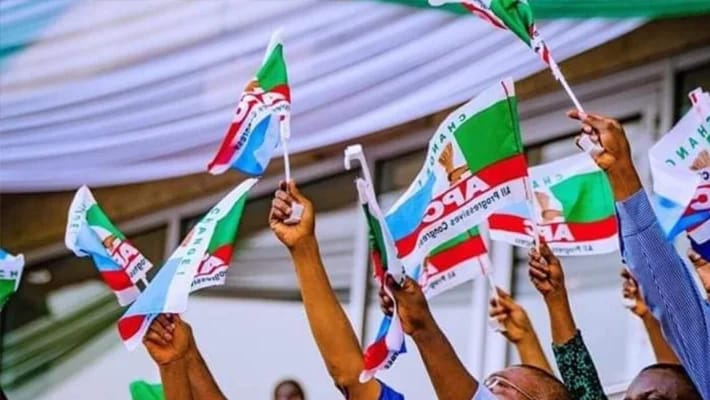
The All Progressives Congress (APC) senatorial primaries of May 18, 2026, were a watershed moment in Nigeria’s political history
Conducted across all 109 districts, the exercise was more than a routine party selection; it was a fierce battle for survival, relevance, and supremacy.
Governors leveraged their incumbency to secure Senate tickets, Senate leaders entrenched their dominance, while several long-standing dynasties collapsed under the weight of internal party intrigues.
In Abia, Orji Uzor Kalu reaffirmed his grip on Abia North with a crushing victory over Philip Nto, while consensus candidates emerged in Central and South. Adamawa produced Governor Ahmadu Fintiri in Adamawa North, after rivals Hamish Idris and Abdurman Kwacham were disqualified. Akwa Ibom saw Senate President Godswill Akpabio win unopposed, consolidating his influence at the national level.
Bauchi delivered Lawal Gumau, Halliru Jika, and Adamu Bulkachuwa, though disputes remain unresolved. Bayelsa’s lineup featured High Chief Fidelis Agbiki, Senator Konbowei Benson for Bayelsa Central, and Senator Ben Murray-Bruce for Bayelsa East. Benue produced Emmanuel Udende, Titus Zam, and Daniel Onjeh, strengthening the party’s hold in the Middle Belt.
Borno was a clean sweep for heavyweights: Ali Ndume in Borno South, Tahir Monguno in Borno North, and Kaka Shehu Lawan SAN in Borno Central. Cross River produced Eteng Williams, Martin Orim, and Asuquo Ekpeyong, while Daniel Asuquo and Oden Ewa were pushed aside. Delta was dramatic, with Ifeanyi Okowa, Ede Dafinone, and Joel-Onowakpo Thomas triumphant, while Ned Nwoko and Ovie Omo-Agege suffered humiliating defeats that dismantled their political dynasties.
Ebonyi delivered Emeka Kenneth Eze for Central, Onyeka Nwaebonyi for North, and Ani Anthony Okorie for South. Edo produced Adams Oshiomhole, Senator Ikpea, and Osagie Ize-Iyamu, while Neda Imasuen lost and Omoregie Ogbeide-Ihama claimed a parallel victory. Ekiti was a clean sweep for Opeyemi Bamidele, Cyril Fasuyi, and Adaramodu Adeyemo.
In the Federal Capital Territory, Usman J. Wowo was disqualified. Gombe delivered Governor Inuwa Yahaya in the North, DCP Mohammed Ahmed in Central, and a Yahaya-aligned candidate in South, while five-term Senator Mohammed Goje was toppled in one of the biggest upsets of the primaries. Imo produced Governor Hope Uzodimma in the West, Prince Alex Mbata in the East, and Senator Patrick Ndubueze in the North, displacing Osita Izunaso and Rochas Okorocha.
Jigawa produced Senator Ahmed Abdulhamid Malam-Madori for North-East, Senator Babangida Hussaini for North-West, and Senator Khabeeb Mustapha for South-West. Kaduna delivered Muhammad Sani Abdullahi, Suleiman Kwari, and Bulus Audu. Kano was a clean sweep for Barau Jibrin, Ibrahim Shekarau, and Rufai Hanga Kawu, all unopposed, underscoring the dominance of established figures.
Katsina produced AbdulAziz Yar’Adua, Nasiru Daura, and Mukhtar Dandutse. Kebbi delivered Senator Adamu Aliero for Central, Senator Yahaya Abdullahi for North, and Retired Major-General Jafar Muhammad Gajere for South. Kogi saw Yahaya Bello in Central, Dr. Erico Ameh in East, and Senator Sunday Karimi in West, while Echocho lost amid controversy.
Kwara produced Governor AbdulRahman AbdulRazaq in Central, Senator Lola Ashiru in South, and a consensus candidate in North, while Muheebat Dankaka lost. Lagos delivered Eshilokun Sanni in Central, Senator Abiru in East, and Idiat Adebule in West. Nasarawa produced Governor Abdullahi Sule in North, Tanko Almakura in South, and Shehu Tukur in West.
Niger saw party-backed candidates emerge, with six aspirants disqualified. Ogun delivered Governor Dapo Abiodun in East, Shuaib Salisu in Central, and Odugbele in West, while Gbenga Daniel boycotted. Ondo was swept by Governor Lucky Aiyedatiwa’s candidates. Osun retained APC incumbents.
Oyo produced Remi Oseni in South, Yunus Akintunde in Central, and Prof. Adeolu Akande in North, while Wasiu Ajimobi, Kolapo Kola-Daisi, and Ademola Alli lost. Plateau delivered party-backed candidates, with five disqualified. Rivers produced Felix Obuah, Senator Allwell Onyesoh, and a Rivers East candidate, while Banigo Ipalibo, Tammy Danagogo, and Tein Jack-Rich were disqualified.
Finally, Zamfara produced party-backed candidates, but seven aspirants were disqualified, the highest nationally.
The primaries revealed three clear trends. Governors consolidated power, sweeping Senate tickets to remain politically relevant beyond their terms. Senate leaders entrenched their positions, ensuring continuity at the top. Dynasties collapsed, with figures like Ned Nwoko, Ovie Omo-Agege, Mohammed Goje, and Echocho suffering humiliating defeats, while disqualifications reshaped the party’s lineup.
The APC primaries were not just an internal exercise; they were a reconfiguration of Nigeria’s Senate caucus, a dramatic reshaping of political fortunes, and a preview of the fierce battles that will define the 2027 general election.