













































The Nigerian Geological Survey Agency (NGSA) has assured residents of the Federal Capital Territory (FCT) that the earth tremor recorded in parts of Abuja on August 4, 2026, has completely subsided, with no indication of continuing seismic activity or structural damage.
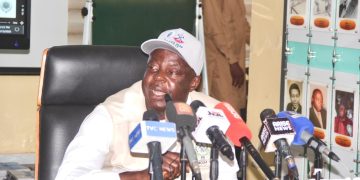
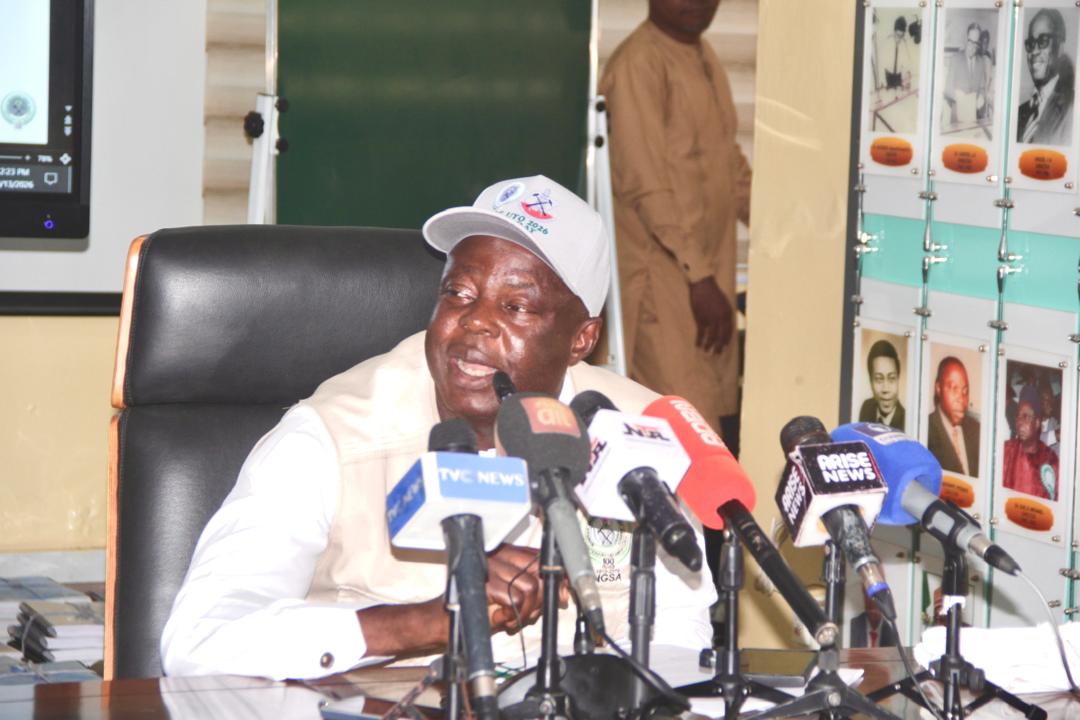
The Director-General of the NGSA, Professor Olusegun Ige, gave the assurance during a technical briefing in Abuja, following more than five days of continuous seismic monitoring, field assessments and analysis of data recorded after the incident.
Professor Ige said the NGSA monitoring station in Utako detected the tremor at 11:23:27 a.m. on August 4, with the event lasting about five seconds and originating from a depth of less than one kilometre.
He described the incident as a low-energy, isolated micro-event with low amplitude and very short duration, stressing that its characteristics did not indicate a destructive earthquake.
“Our message to residents of Abuja is clear: there is no cause for alarm. The tremor was a very low-energy, isolated event, and our monitoring has confirmed that the seismic activity has completely subsided,” he said.
The NGSA boss explained that the Agency continued monitoring the area for more than five days after the incident, with waveform records showing only normal baseline seismic noise and no evidence of continuing tremor activity.
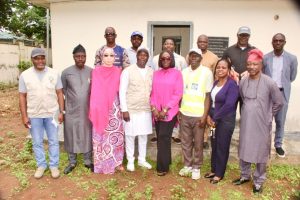
He said field assessments were also carried out at locations where the tremor was reportedly felt, including the Defence Intelligence Agency facility at Mambila Barracks, Asokoro, NNPC Towers and selected buildings within the Central Business District.
According to him, no structural damage, injury or serious discomfort attributable to the tremor was recorded at the locations assessed.
The Director-General said preliminary geological analysis suggested that the tremor may have resulted from the release of accumulated stress within the earth’s crust through existing geological structures.
He noted that although Nigeria is not located along a major active tectonic plate boundary, geological stresses could occasionally be released through existing fault systems, resulting in localised seismic events.
Professor Ige, however, emphasised that the August 4 incident was not indicative of an imminent destructive earthquake, urging residents to remain calm and rely on verified information from competent authorities.
The briefing also featured a technical demonstration of the NGSA’s seismic monitoring operations, during which journalists observed the Agency’s equipment and how seismic signals are detected, recorded and analysed by technical personnel.
Professor Ige said the demonstration was intended to strengthen public understanding and confidence in the scientific basis of the Agency’s assessment.
The NGSA said the incident had also highlighted the need to strengthen Nigeria’s national capacity for seismic monitoring and geohazard management.
It called for expansion of the national seismic monitoring network, improved logistics and funding, as well as increased deployment of appropriate monitoring equipment at major mining and quarrying sites.
The Agency further recommended that geological and seismic data be incorporated into the planning and construction of major infrastructure such as dams, bridges, railways, airports, mines and quarries.
It also stressed the need for strict compliance with structural and safety standards, continuous public education on tremor and earthquake safety, and regular training of seismic monitoring personnel.
Professor Ige assured Nigerians that the NGSA would continue monitoring seismic activity across Abuja and other parts of the country and promptly communicate any development requiring public attention or government intervention.
He urged residents to remain calm and go about their normal activities, while advising the public to report unusual ground vibrations or concerns relating to seismic activity to the NGSA.
The development followed a directive by the Minister of Solid Minerals Development, Dr. Dele Alake, for the NGSA to provide regular updates on seismic developments around Abuja for appropriate government response.
Residents may contact the NGSA emergency line on 09139442811 to report unusual ground vibrations or other seismic concerns.