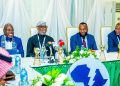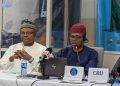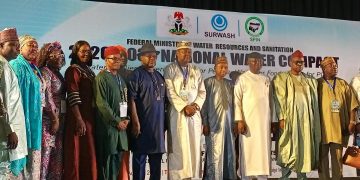






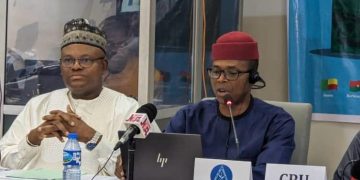
































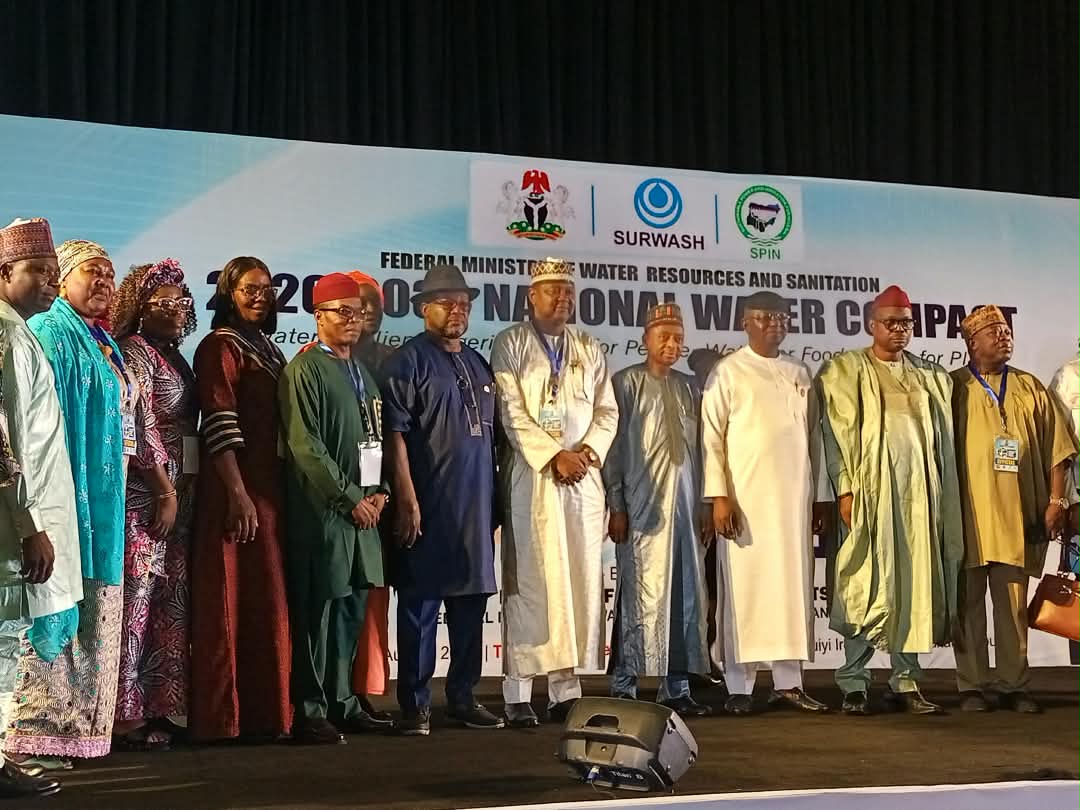
The Minister of Water Resources and Sanitation, Prof. Joseph Utsev, has unveiled a plan to develop a National Water Compact to improve water supply and sanitation across Nigeria.
At the unveiling in Abuja, Professor Utsev said the Compact would require the support and commitment of the 36 state governments and the Federal Capital Territory.
He said the initiative followed the adoption of the African Union’s Africa Water Vision and Policy 2025–2063, which Nigeria is adapting to meet its development needs.
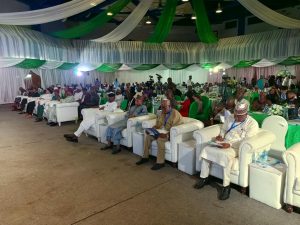
The minister said a draft of the Compact had already been prepared by a National Technical Working Committee made up of government officials and other stakeholders.
He stressed that the Federal Government could not implement the Compact alone, adding that the ministry had written to the Nigeria Governors’ Forum to seek the commitment of state governors.
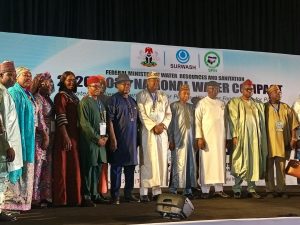
“It is a national commitment to transform Nigeria’s water future,” Utsev said.
The minister said the framework would focus on three areas — Water for People, Water for Food Security and Water for Planet.
According to him, the Compact will bring water supply, sanitation, agriculture, environmental protection and climate action under one national plan.
He said President Bola Ahmed Tinubu had also been briefed on the development of the Compact.
Also speaking, the Minister of State for Health and Social Welfare, Dr. Iziaq Adekunle Salako, said investment in water and sanitation was important for disease prevention and public health.
Salako said poor access to water and sanitation exposed Nigerians to preventable diseases and affected their health and productivity.
He said hospitals and other healthcare facilities needed reliable water and sanitation services to maintain hygiene and provide safe healthcare.
“We must see investment in water and sanitation as an investment in disease prevention,” Salako said.
The Acting Country Director of the World Bank, Mr. Taimur Samad, said Nigeria had many policies and plans but needed one framework to turn them into practical results.
“There is no want of plans, agendas and roadmaps,” Samad said, stressing the need for a unified platform.
He said state governments had a major role to play in water-sector reforms and investments because they provide most water and sanitation services.

“Public financing will not be enough,” the World Bank official warned, calling for sustainable financing and stronger institutions.
Speaking on behalf of development partners, Emily Kilongi said strong state ownership would be critical to translating national commitments into actions that reflect local priorities and realities.
Kilongi who called for clear commitments, measurable results, mutual accountability and regular reporting added that financing alone would not guarantee success without strong institutions, reliable data and sustainable service-delivery systems.
The Acting Permanent Secretary of the Ministry of Water Resources and Sanitation, Mr. Ali Ibrahim Dallah, and development partners said the success of the Compact would depend on strong state support and effective implementation.
Ultimately, stakeholders said the Compact would only be successful if it delivers safe and sustainable water services to Nigerians.