








































The Minister of Solid Minerals Development, Dele Alake, has advocated the establishment of regional energy and industrial hubs across Africa as a strategic approach to accelerate mining industrialization, deepen regional integration, and strengthen supply chains for critical minerals needed for the global energy transition.
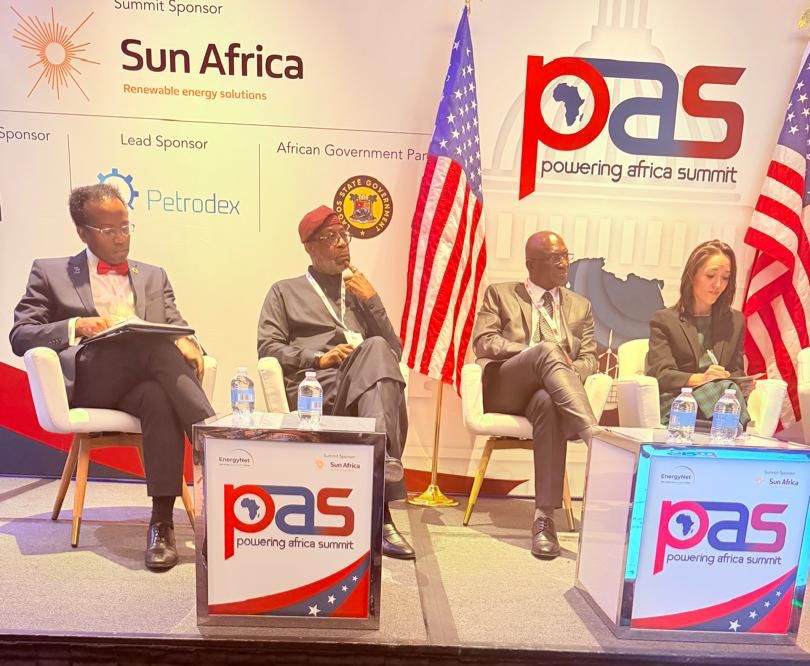
Alake made the call while speaking at a high-level panel on “Critical Minerals in Africa: Meeting Global Demand” during the Powering Africa Summit in Washington, D.C., United States.
The Minister emphasized that coordinated regional frameworks, backed by sustainable international partnerships, remain essential to meeting rising global demand for critical minerals.
He proposed the development of cross-border industrial corridors, similar to the Lobito Corridor, to unlock mineral resources and drive economic growth.
He identified key prospective corridors, including the Lagos–Abidjan Corridor spanning Nigeria, Benin, Togo, Ghana, and Côte d’Ivoire, as well as the Walvis Bay Corridor, noting that such frameworks would catalyze infrastructure development, improve energy access, and promote value addition within the continent.
Alake further stressed the importance of integrated energy planning, noting that shared infrastructure such as regional power systems can support industrial clusters, enhance local beneficiation, and enable technology transfer across borders.
Highlighting ongoing reforms under the administration of Bola Ahmed Tinubu, the Minister said Nigeria has strengthened governance in the mining sector through improved regulatory frameworks, digitization of licensing processes, and enhanced ease of doing business.
He noted, that these reforms, guarantee secure tenure for mineral title holders, providing the long-term policy stability required to attract investment.
Dr. Alake also stated that government is expanding the availability of internationally certified geological data to support evidence-based investment decisions, in line with global best practices.
On sector security, Alake acknowledged existing challenges but pointed to measurable progress through the deployment of Mining Marshals.
According to him, over 350 suspected illegal miners have been arrested within the past year, with more than 150 currently facing prosecution—an indication of strengthened enforcement and regulatory compliance.
Reaffirming Nigeria’s commitment to a transparent and investor-friendly environment, the Minister outlined policy incentives including tax waivers on imported mining equipment and the repatriation of profits, subject to due compliance with fiscal obligations.
“We have taken deliberate steps to de-risk the sector and enhance investor confidence. As a result, Nigeria has attracted over $2.6 billion in Foreign Direct Investment into the mining sector within the last two and a half years,” he stated.
In her contribution, the Senior Vice President and Global Head of Origination at the Export-Import Bank of the United States, Sarah Whitten emphasized the need for policy consistency and long-term commitment from participating governments to sustain investor confidence and unlock private sector financing.
The panel also featured key stakeholders from across the global mining value chain, reflecting growing international interest in Africa’s critical minerals sector.