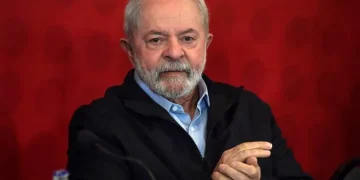






































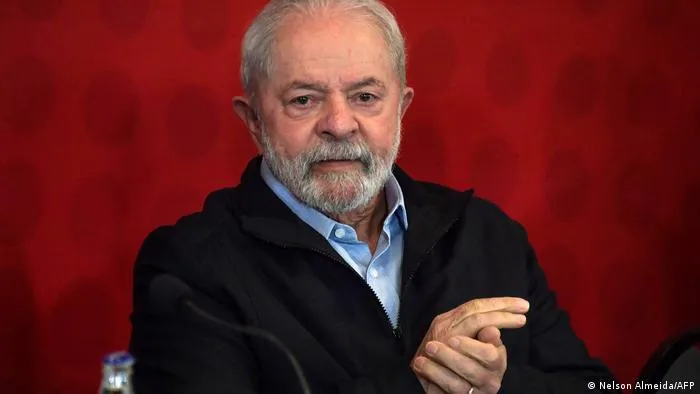
Brazilian President Luiz Inácio Lula da Silva has secured a historic fourth term in office after defeating his far-right challenger, Flávio Bolsonaro, in a dramatic election comeback.
With 100 per cent of the votes counted, Lula, 80, secured 51.79 per cent of the vote, defeating his 45-year-old rival, who polled 48.21 per cent.
The final results showed that Lula received 4.4 million more votes than Bolsonaro, confirming his victory in the presidential election.
However, shortly after Brazil’s electoral authority confirmed the outcome, Bolsonaro refused to concede defeat and called for the results to be annulled.
Lula’s victory marked a remarkable political turnaround after he narrowly lost the first round of voting to Bolsonaro in early October, raising questions about his political future and leaving his supporters among Brazil’s progressive movement facing three weeks of uncertainty.
Since Brazil returned to democracy in the 1980s, no candidate who finished second in the first round of a presidential election had gone on to win the second round.
Lula broke that pattern on Sunday, triggering celebrations in the streets of São Paulo, where he had been following the election developments, and at the hotel where he watched the vote count.
Addressing a packed conference hall filled with jubilant supporters in São Paulo, the president-elect said his victory would usher in a change in the country’s governance.
“We are going to change the way that this country is governed,” Lula said.
Describing the outcome as a rejection of denialism, he added: “This election was a defeat for denialism.”
Lula also expressed gratitude to God and the Brazilian electorate for supporting his return to office.
“I want to thank God and to thank you, Brazilian men and women of this country … it was democracy that made this happen,” he said.
The victory also drew praise from Lula’s health minister, Alexandre Padilha, who described the result as a significant triumph for the Brazilian people.
Padilha said the election had given voters an opportunity to consider the implications of Lula’s leadership for the environment, the country’s national health service, its education system and the constitution.
“This is a huge victory for the Brazilian people who in the second round had the chance to think about what President Lula means for the environment, for the defense of our national health service and our education system and the Brazilian constitution. And the risks that the extreme right candidate entailed,” he said.
Padilha further described the outcome as significant beyond Brazil, saying it carried an important message for other countries in the region and the international community.
“It’s a massive victory – not just for Brazil. It’s also an important signal to the rest of Latin America and to the world,” he added.