












































By Adora Nweke
The Nigerian Maritime Administration and Safety Agency (NIMASA) has reaffirmed its commitment to provide regulatory leadership and technical coordination for the development of a National Action Plan on maritime decarbonisation.
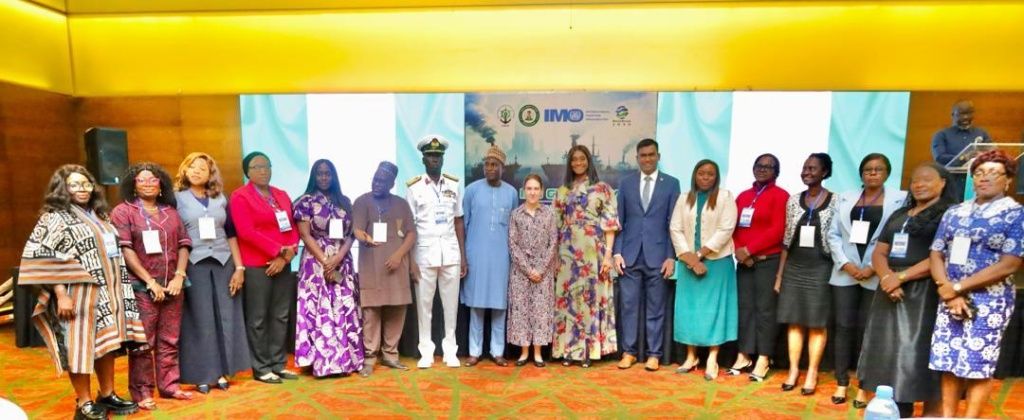
Director-General of NIMASA, Dayo Mobereola, made this known during a national stakeholders’ workshop convened to advance the initiative.
He described the engagement as a strategic step towards aligning Nigeria’s maritime sector with the Federal Government’s blue economy and climate objectives.
The DG, represented by the agency’s Executive Director, Operations, Mr. Fatai Taiye Adeyemi, highlighted the importance of the International Maritime Organization GreenVoyage2050 Project, a technical cooperation programme designed to support developing countries in implementing the IMO greenhouse gas reduction strategy.
Mobereola stated that the proposed National Action Plan would reflect Nigeria’s specific realities, build on existing institutional capacities, address operational gaps and align with broader national economic and environmental priorities.
He stressed that maritime decarbonisation goes beyond compliance with international conventions, noting that it is critical to protecting marine ecosystems, safeguarding public health, strengthening the blue economy and ensuring the competitiveness of Nigeria’s shipping industry.
Also speaking, the Technical Manager of the GreenVoyage2050 Project, Astrid Dispert, underscored the need for a coherent and globally aligned regulatory framework to accelerate emissions reduction in the maritime sector.
She emphasised NIMASA’s pivotal role in driving implementation at the national level.
The GreenVoyage2050 Project provides technical expertise and institutional support to assist countries in developing and executing national plans that promote sustainable shipping practices, encourage investment in cleaner technologies and strengthen long-term emissions management.
Through the collaborative framework, Nigeria is positioning its maritime sector to contribute meaningfully to global climate commitments while fostering sustainable growth within the blue economy.