


































By Peter Adelowo
The Social Democratic Party, SDP, has urged young professionals to take active interest in politics and contribute to efforts aimed at addressing Nigeria’s development challenges.
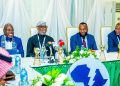
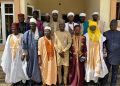
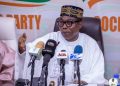
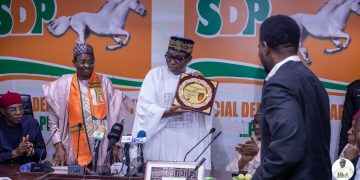
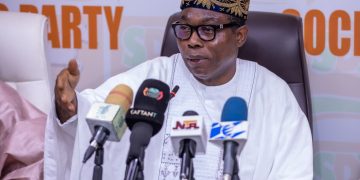
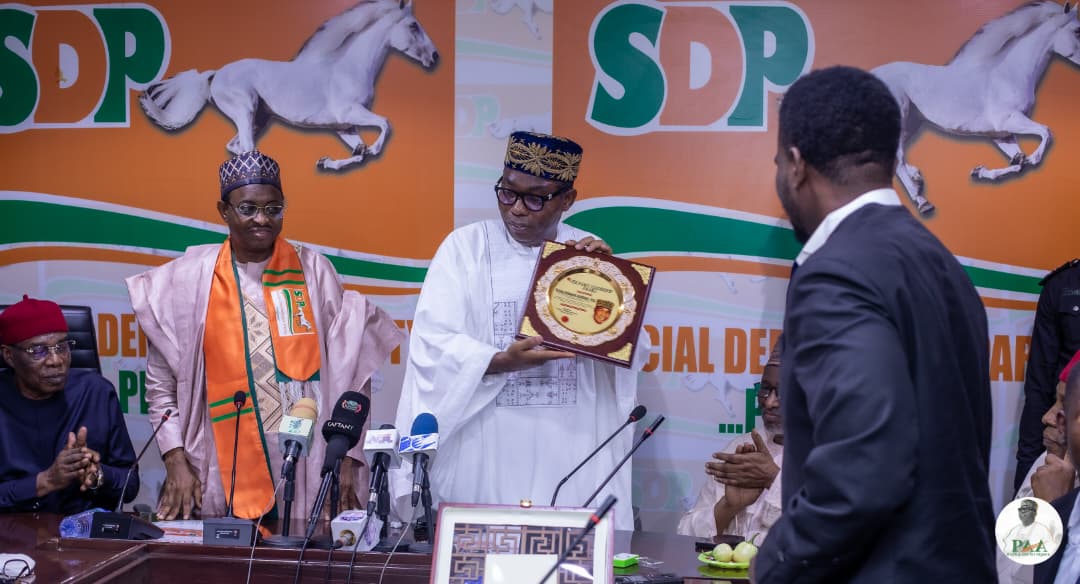
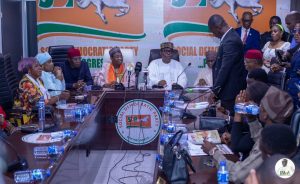
The National Chairman of the party, Professor Sadiq Gombe, made the call in Abuja while receiving members of the Young Progressive Professionals at the SDP National Secretariat.
He said their visit demonstrated that young Nigerians still had hope in the country’s future.
Gombe said the involvement of young professionals was particularly important at a time when many Nigerians were concerned about poverty, insecurity, unemployment and other socio-economic challenges.
He urged the group to deepen political participation and support initiatives aimed at promoting what he described as competent and purposeful leadership, stressing that the future of the country depended largely on the younger generation.
The National Chairman said the party’s presidential candidate, Prince Adewole Adebayo, and vice-presidential candidate, Professor Usman Bugaje, were committed to providing what he described as an alternative approach to governance.
He called on the professionals to engage their peers and encourage wider participation in the electoral process.
Gombe also urged the group to promote national unity, saying political participation should not be based on ethnic, religious or regional considerations.
In his remarks, SDP presidential candidate, Prince Adewole Adebayo, commended the Young Progressive Professionals for organising themselves around issues of national development and for seeking engagement with the party.
Adebayo said young Nigerians had an opportunity to contribute directly to nation-building, noting that unlike generations born into already-developed societies, they had the opportunity to participate in building institutions and systems that would shape Nigeria’s future.
He recalled his early involvement in the SDP in 1991 while studying law at the University of Ife, saying his decision followed his study of the party’s manifesto and the recommendations of the Constitutional Assembly that informed Chapter Two of the Nigerian Constitution.
Adebayo said Nigeria needed a deliberate system for developing political leadership, arguing that political parties should serve as platforms where people acquire experience and learn the responsibilities of public service.
He identified poverty and insecurity as major challenges requiring institutional reforms, saying effective governance required both sound institutions and a culture of accountability among those managing them.
The SDP presidential candidate said the party’s approach was centred on building a common national purpose, with particular attention to the Fundamental Objectives and Directive Principles of State Policy contained in Chapter Two of the Constitution.
He urged the professionals to broaden their engagement beyond their immediate group and encourage more Nigerians, particularly young people, to participate in political and civic activities.
Adebayo also called for national cohesion, urging Nigerians not to support ideas that promote division along ethnic, religious, regional or gender lines.
Also speaking, the SDP vice-presidential candidate, Professor Usman Bugaje, stated that Nigeria required political will and competent leadership to address its development challenges.
Bugaje cited the experiences of countries such as Japan, South Korea and Singapore, which he said had overcome difficult economic conditions through deliberate policies and effective leadership, adding that Nigeria could also pursue a similar development path.
Earlier, the interim chairman of the Young Progressive Professionals, Emmanuel Fortunatus, said the group visited the SDP leadership to identify with its efforts and exchange views on the country’s challenges.
Fortunatus said rising living costs, unemployment and economic pressures were affecting families and making life increasingly difficult for many Nigerians.
He urged political leaders to address corruption, poverty and other issues affecting citizens.