












































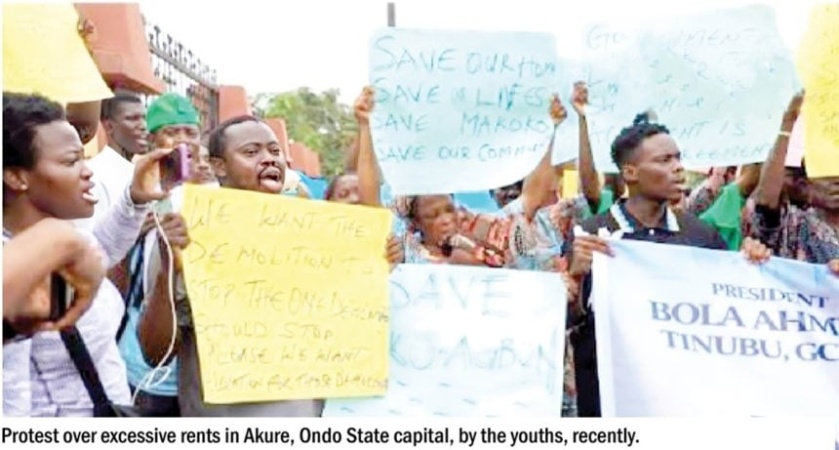
Tenants and home seekers across Nigeria are facing severe housing stress as rents in major cities like Lagos, Abuja, Ibadan, and Akure continue to soar, often consuming more than half of household incomes.
Rising costs have been blamed on high inflation, expensive building materials, speculative landlords, and exploitative practices by estate agents.
In Lagos, self-contained rooms now go for N1.5 million while one-bedroom flats fetch N3 million in areas such as Ogudu, Ajah, and Gbagada. Estate fees, legal charges, and agency commissions further escalate move-in costs, pricing many residents out of the market.
In Akure, rents for a single-bedroom apartment have surged to N600,000–N1 million, forcing students and young professionals to protest against the trend.
Government responses are underway: Lagos State is set to pass the Lagos Tenancy Law to regulate landlord-tenant relationships, cap advance rent, and limit agency fees.
Oyo State has engaged estate agents to standardize commissions and ethical practices.
Meanwhile, experts predict strong rental yields in urban growth corridors, including Lagos’s Lekki, Ajah, and Sangotedo areas.
Housing advocates, including the Housing Development Advocacy Network (HDAN), warn that failure to act could deepen housing insecurity and urban inequality.
They urge government at all levels to expand affordable housing, enforce tenancy laws, regulate short-let developments, and invest in infrastructure to make satellite towns viable alternatives.
The rising rent crisis is increasingly being seen as a social emergency, with calls for decisive action to protect tenants’ rights, ensure access to affordable shelter, and stabilize urban communities.